

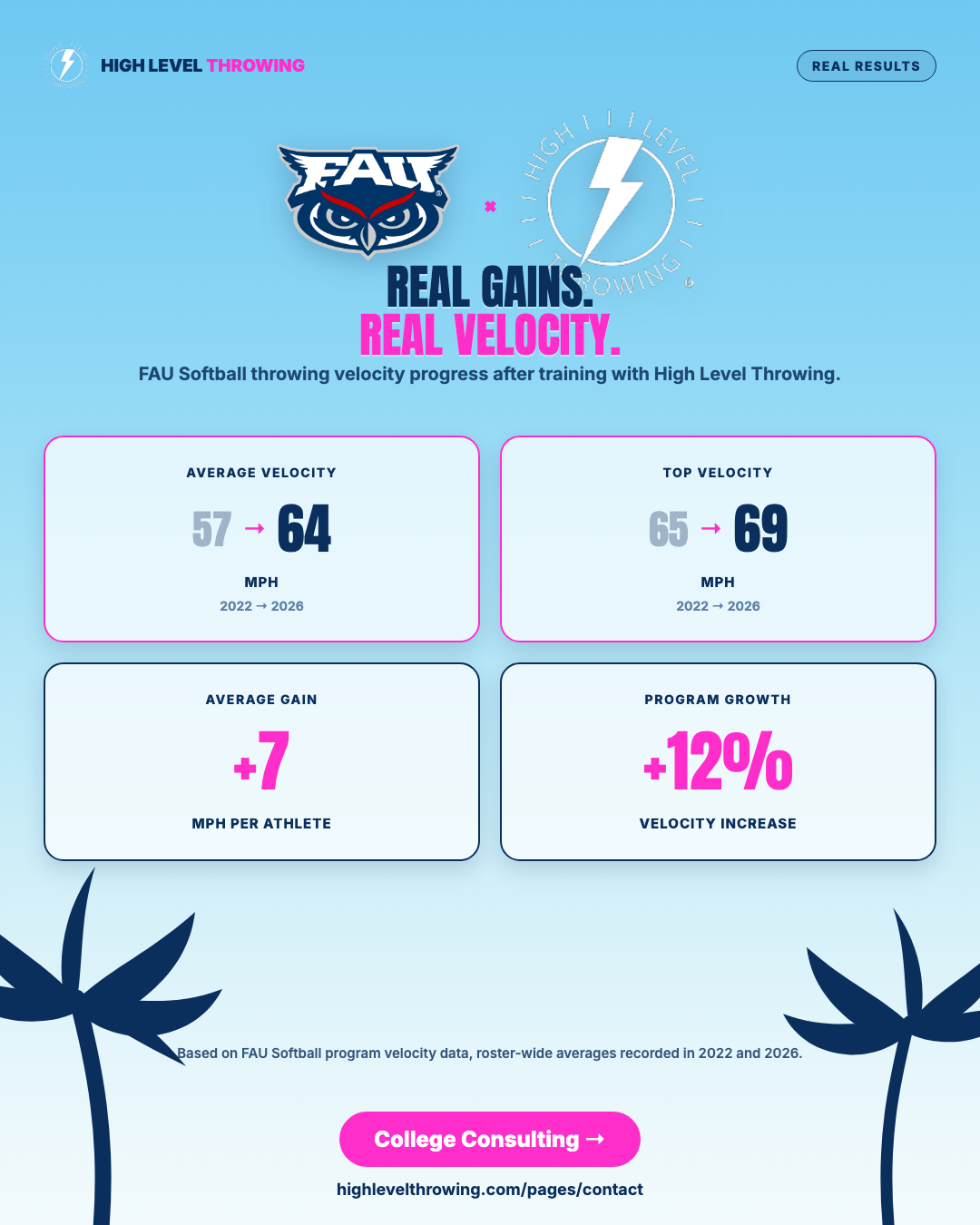
Four years ago the FAU Softball roster averaged 57 mph on their overhand throws. This season they average 64. The hardest thrower on the team went from 65 to 69.
That is a seven mile-per-hour jump across an entire roster — a twelve percent increase program-wide. Not one standout, not a transfer class, the whole group.
Why roster-wide averages matter more than a highlight
It is easy to point at one athlete who added velocity and call a program successful. Rosters turn over, athletes mature, and a single number can come from a single good signing.
A roster-wide average is harder to fake. It includes the freshman who arrived last fall and the senior who has been in the program four years. It includes the catcher, the corner outfielder and the utility player who only throws in warm-ups. When that number moves seven miles per hour, something systematic changed in how the whole team throws.
How the partnership actually works
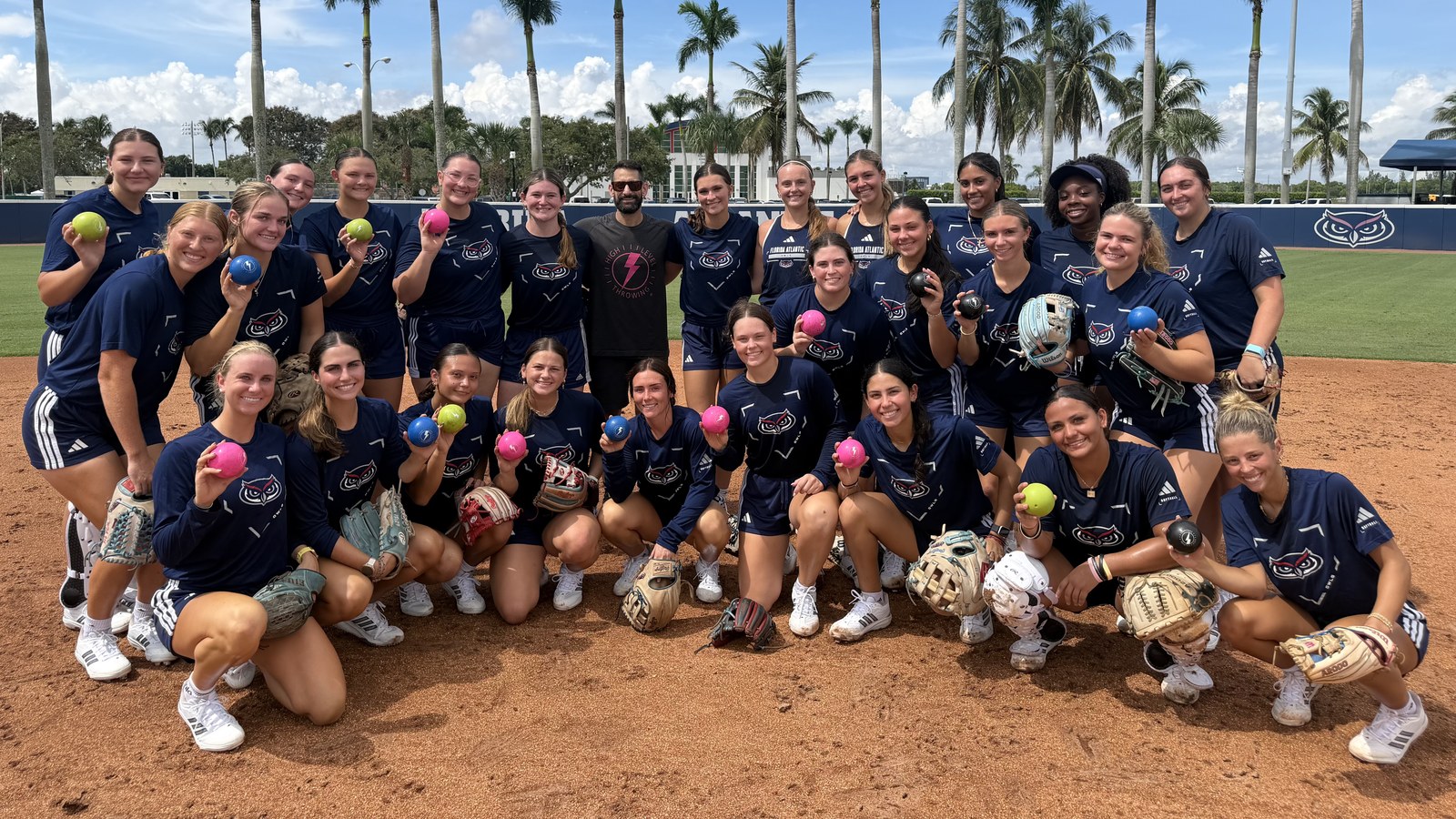
High Level Throwing is not a visiting clinic that comes through once and leaves a binder behind. The work with FAU Softball runs on a few pieces that fit into what the program is already doing:
- On-site sessions. Austin Wasserman works directly with the roster on their own field, running the same progressions the athletes will use on their own afterward.
- A throwing guide built for the program. Not a generic handout — the warm-ups, arm care, med ball work and patterns written out so a coach can run them without us there.
- Velocity testing as a habit. Overhand throwing velocity gets measured and recorded, which is the only reason a comparison like 2022 to 2026 exists at all.
- Equipment that matches the drills. Lightning Ball plyo sets and bands, so the constraint work in the guide can be done on any given day.
The point of the structure is that the staff owns it. We are not the reason the athletes throw well in March; the program running the work every week is.
What the athletes are actually doing
The throwing work follows the same shape as every High Level Throwing® session, scaled to a college roster:
- Introduction and discussion — what we are training and why
- Dynamic warm-up and prep drills
- Arm care, med ball and HLT patterns
- Drills and progressions by position
- Overhand throwing velocity testing
Most of it is unglamorous. Athletes move better before they throw harder, and the drills are built to make efficient movement the easiest option rather than something they have to think about mid-throw.
What this means for other programs
FAU is a Division I program with a full staff and a facility. The reason the model travels is that none of the gains above came from equipment a smaller program cannot buy or time a high school team does not have. They came from measuring velocity, training the pattern that produces it, and repeating that for four years.
If you run a college program, a travel organization or a high school team and want to know what that would look like for your athletes, that is exactly what the clinics and consulting work are for.
Velocity figures are from FAU Softball program data, roster-wide averages recorded in 2022 and 2026.
Bring a High Level Throwing® clinic to your program →
College consulting →