
Understanding the Long Arm Pathway in Baseball and Softball. How High Level Throwing® develops position-specific throwing mechanics without teaching a one-size-fits-all approach.
When you watch a Major League Baseball outfielder throw a runner out at home plate, you will often notice something different about the way the throwing arm moves compared with an infielder making a quick throw across the diamond.
The outfielder’s arm may travel through a larger, longer pathway, while the infielder often uses a more compact arm action to get the ball out of the hand quickly.
Why does this difference matter?
At High Level Throwing® (HLT), we believe athletes need to understand how throwing mechanics work together with the demands of their position. Throwing is not simply about moving the arm from one position to another. It is about developing the entire throwing athlete, understanding the arm pathway, coordinating the body, and learning how to apply those mechanics to different throwing situations.
The goal is not to teach every player the same collection of throwing drills. The goal is to develop a throwing athlete who can adapt the throwing motion to the demands of the game.
Understanding the Outfielder’s Long Arm Pathway
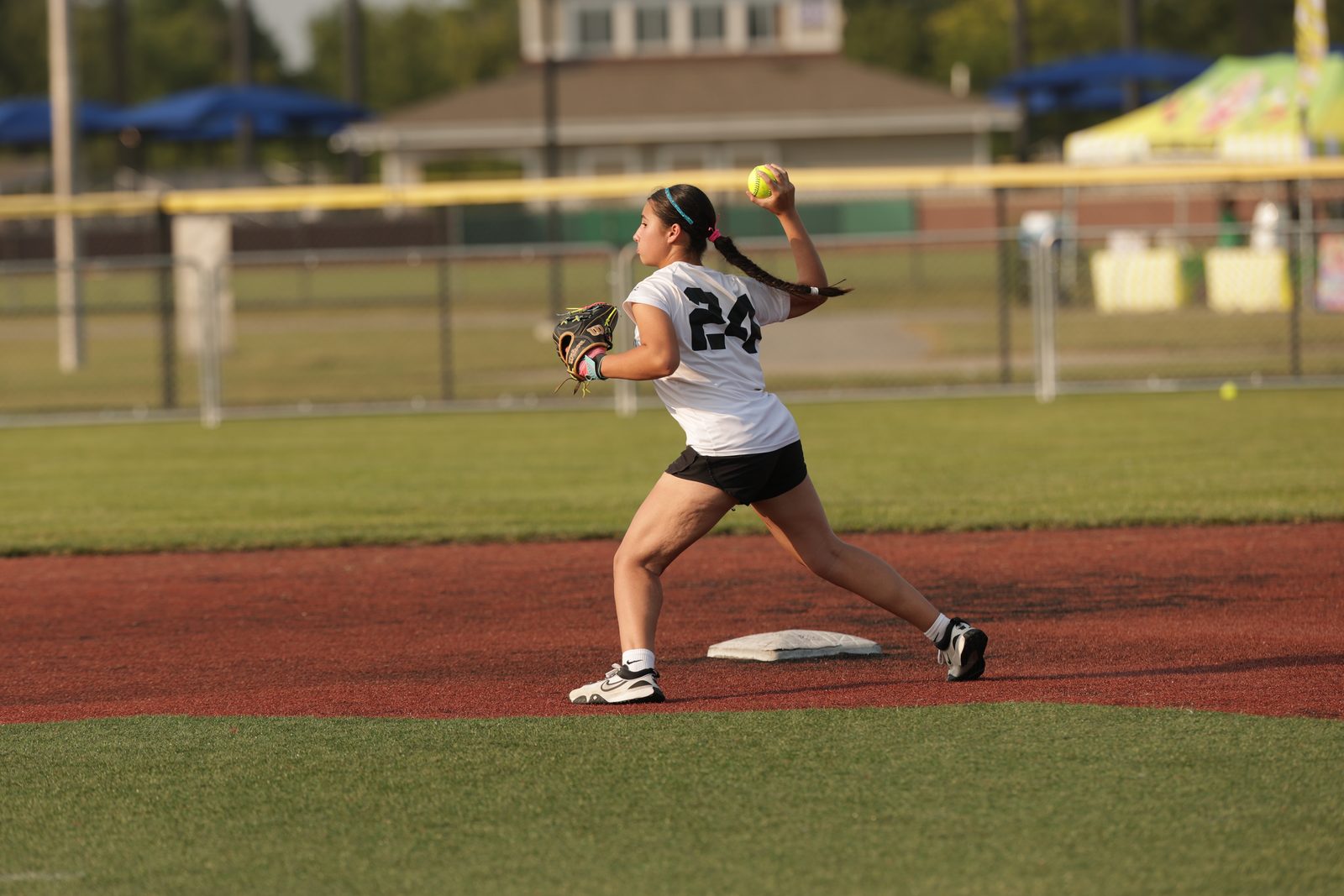
Outfielders routinely face some of the longest throws in baseball and softball. They may need to throw from deep center field to home plate, from right field to third base, or from the gap to a cutoff player.
These throws demand distance, ball speed, accuracy, and efficient movement.
The long arm pathway is an important concept to study when examining how many elite outfielders organize their throwing motion. Rather than rushing the throwing arm through a shortened path, the athlete allows the arm to move through a larger, more continuous throwing pathway when the situation permits.
This can include:
- A longer arm pathway
- A coordinated throwing sequence: the lower body, trunk, shoulder, and arm must work together to deliver the throw.
- Efficient movement into the throw: the athlete uses footwork and momentum to help organize the body toward the target.
- A well-timed release: the arm pathway must coordinate with the body’s movement to produce an accurate, powerful throw.
- A complete follow-through: the body continues moving through the throwing action rather than abruptly stopping at release.
A long arm pathway is not about making the arm as big as possible or deliberately reaching into a particular position. It is about understanding the throwing pattern and developing an efficient sequence that fits the athlete and the task.
At HLT, we want athletes and coaches to look beyond the position of the hand or elbow at one isolated moment. We want them to understand how the arm travels through the entire throwing motion.
Why Does the Infield Throw Often Look Different?
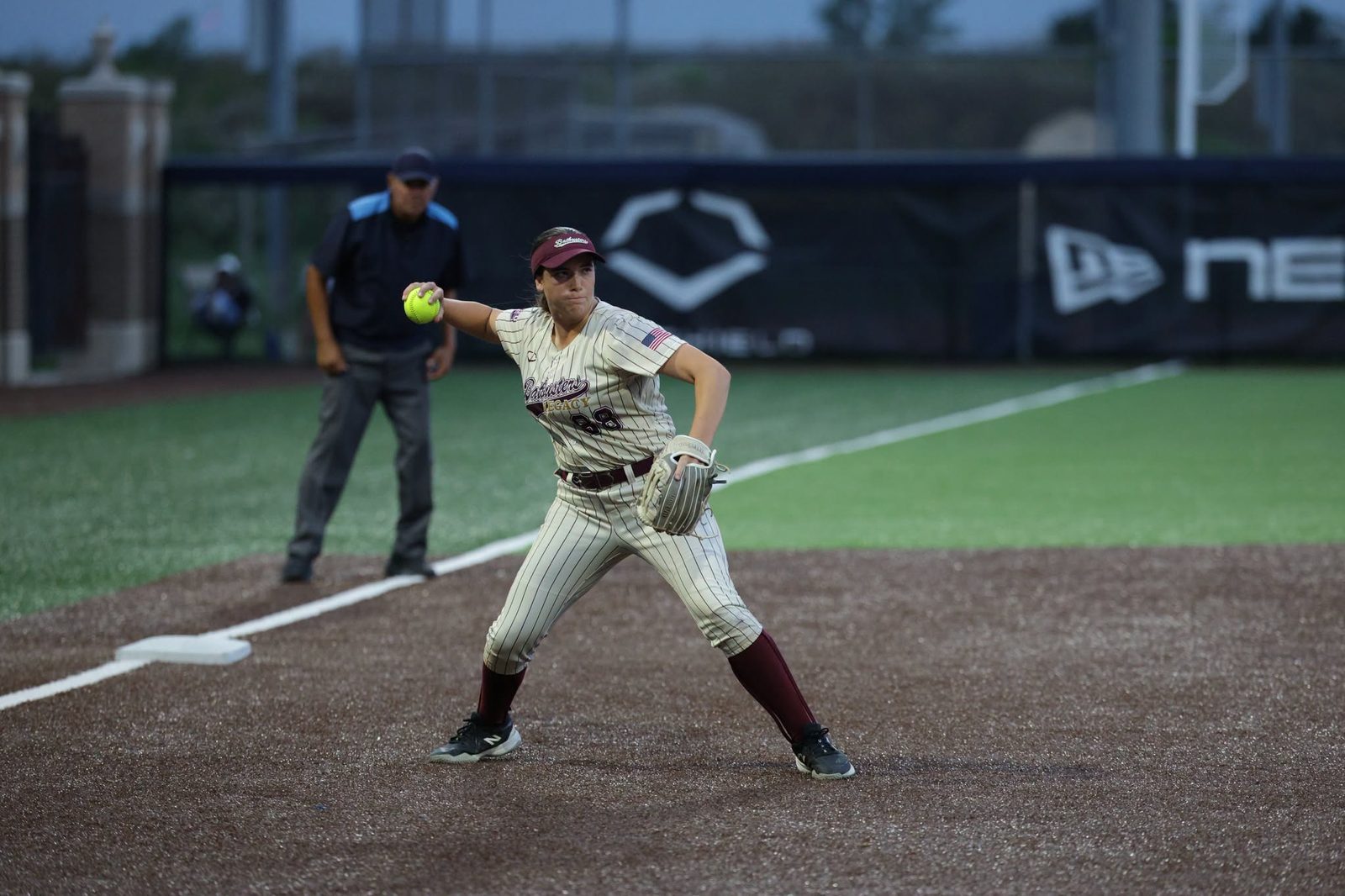
An infielder operates under a different set of demands.
A shortstop fielding a ground ball may have only a brief window to transfer the ball, organize the body, and release an accurate throw to first base. A second baseman turning a double play has even less time to work with.
In these situations, a more compact throwing action may help the athlete meet the time demands of the play.
An infielder’s throwing mechanics must account for:
- A quick release: the athlete must move efficiently from fielding the ball to releasing the throw.
- A rapid transition: the glove-to-hand exchange and body movement must work together.
- Position-specific footwork: the athlete may throw while moving laterally, crossing the body, jumping, or throwing off balance.
- Adjustable throwing pathways: the arm action must accommodate different fielding positions and release windows.
- Accuracy under pressure: the throw must arrive at the intended target while the athlete manages the time available.
A compact action is not automatically better, just as a longer action is not automatically better.
The question is whether the athlete’s throwing motion is appropriate for the situation.
An infielder making a routine throw to first does not necessarily need the same preparation as an outfielder throwing from the warning track. However, an infielder making a difficult throw across the diamond may have to use a different arm pathway from the one used on a routine ground ball.
Position-specific throwing mechanics are about adapting the motion to the situation, not forcing an athlete into a single arm shape.
Watch MLB Outfielders Use a Long Arm Pathway
The following Major League Baseball videos provide useful real-world examples to study. Watch them in slow motion when possible and compare the arm pathway, body movement, and timing of the release.
1. MLB Film Room: Outfielders’ Long Arm Throw to Plate
Start here for the long arm pathway. Watch the MLB Film Room video: Outfielders’ Long Arm Throw to Plate
This three-minute MLB Film Room video is specifically focused on outfielders’ long-arm throws to the plate.
As you watch, pay attention to how the throwing arm moves through its preparation and how that movement coordinates with the athlete’s body as the throw develops.
2. Bradley Zimmer: 101.5-MPH Outfield Throw
Watch Bradley Zimmer’s 101.5-MPH outfield assist
This Statcast video examines Bradley Zimmer’s powerful outfield throw against Minnesota.
Use the footage to study how an elite outfielder organizes the throwing motion when a long throw demands both velocity and a useful trajectory. Remember that ball speed alone does not tell us whether every aspect of the throwing mechanics is ideal.
3. Alex Verdugo: 98.4-MPH Throw
Watch Alex Verdugo’s 98.4-MPH throw
Verdugo’s throw against Milwaukee offers another example of the demands placed on an outfielder’s arm.
Compare his movement with Zimmer’s. Look at the arm pathway, the timing of the release, and how the entire body contributes to the throw.
4. Julio Rodríguez: Arm Strength and Accuracy
Read and watch MLB’s coverage of Julio Rodríguez’s outfield throwing
Rodríguez provides a valuable example of why arm strength must be considered alongside accuracy, footwork, extension, and body movement.
His approach also reinforces an important coaching principle: a strong arm is most useful when the athlete can consistently direct the throw toward the intended target.
How High Level Throwing® Approaches Position-Specific Mechanics
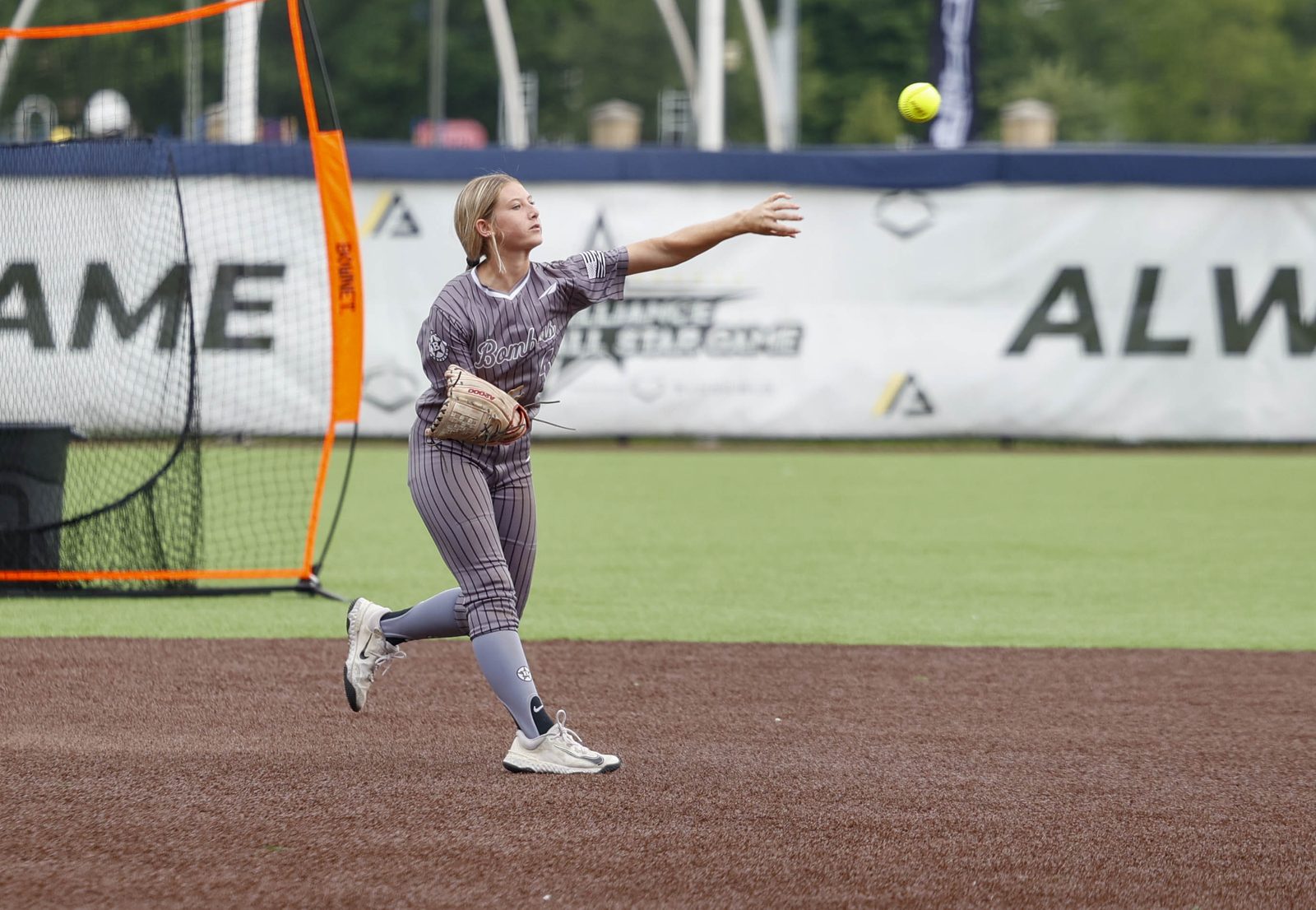
At High Level Throwing®, we do not view throwing development as a collection of unrelated drills.
We develop throwing athletes by teaching them to understand the throwing motion, recognize the movement patterns involved, and apply those concepts to the demands of baseball and softball.
An outfielder needs to understand how to organize the body and arm for throws that require distance and velocity. An infielder needs to understand how to adapt the throwing action to quick releases, different fielding positions, and changing time constraints.
Both athletes need a foundation in throwing mechanics.
The difference is how those mechanics are expressed in the situation.
HLT’s emphasis on understanding the throw from the ground up helps coaches look at the relationship between footwork, body movement, arm pathway, and release timing rather than treating each part as an isolated skill.
This is also why copying the arm shape of a professional player is not enough. An athlete must learn how to develop the movement pattern and apply it appropriately to their own throwing demands.
The objective is not to make every athlete throw like a particular MLB player. It is to develop the athlete’s ability to throw efficiently and effectively across the situations they encounter in the game.
What This Means for Youth Baseball and Softball Players
Young athletes often hear that they need to throw harder, get their arm up, or make their throwing motion shorter.
But without understanding the complete throwing action, these instructions can leave athletes focusing on isolated body positions instead of learning how the motion works.
An outfielder who is continually rushed through a throwing pathway may struggle to organize a throw that requires distance. An infielder who uses too much preparation on a quick play may struggle to release the ball on time.
Neither situation should be addressed by automatically prescribing the same solution to every athlete.
Coaches should consider the player’s age, experience, physical capabilities, throwing demands, and current movement pattern. Throwing development should progress appropriately, with workloads managed and discomfort taken seriously.
For both baseball and softball athletes, the goal is to develop a throwing motion that can adapt as the demands of the game change.
The Bottom Line: Develop the Throwing Athlete, Not Just the Arm Shape
The difference between an outfielder’s long arm pathway and an infielder’s more compact throwing action is an excellent example of why throwing mechanics must be understood in context.
An outfielder often has the opportunity to use a longer pathway for a throw that requires distance. The infielder often needs to organize a quicker throwing action to meet the demands of the play. Both require coordination, efficient movement, and appropriate timing.
At High Level Throwing®, we believe athletes deserve more than a list of drills or a handful of mechanical cues. They deserve to understand what they are doing, why they are doing it, and how to apply their throwing mechanics to the game.
We do not simply teach athletes how to make a throw. We develop throwing athletes.
That distinction is at the heart of High Level Throwing® and the reason understanding the throwing motion matters at every position on the field.
Learn the difference between outfield and infield throwing mechanics, explore a long arm pathway, and study MLB outfield throws through the High Level Throwing® approach.